
Madison County VINE Coverage
VINE stands for Victim Information and Notification Everyday. It is a custody-information and alert service, and the sheriff's office treats it as the official channel for updates. The MCSO Jail Information page sends readers straight to VINE for custody-status changes and criminal-case details. It lists the national VINELink website along with 877-846-3425, and it notes one catch: you must register to receive a release notice. Detention staff will not make those calls themselves.
The county does not spell out every data field VINE carries, nor does it promise that each new booking appears right away. A fresh arrest may show up first on the MCSO current roster, or it may take a phone call to the jail to confirm. Alabama also runs its own Victim Notification System, but that program centers on people convicted in the state and placed in Department of Corrections custody. It is not a substitute for a fresh-booking list.
For local questions, start with the county's own page. It shows the official jail instructions where Madison County names VINE as its notification channel.
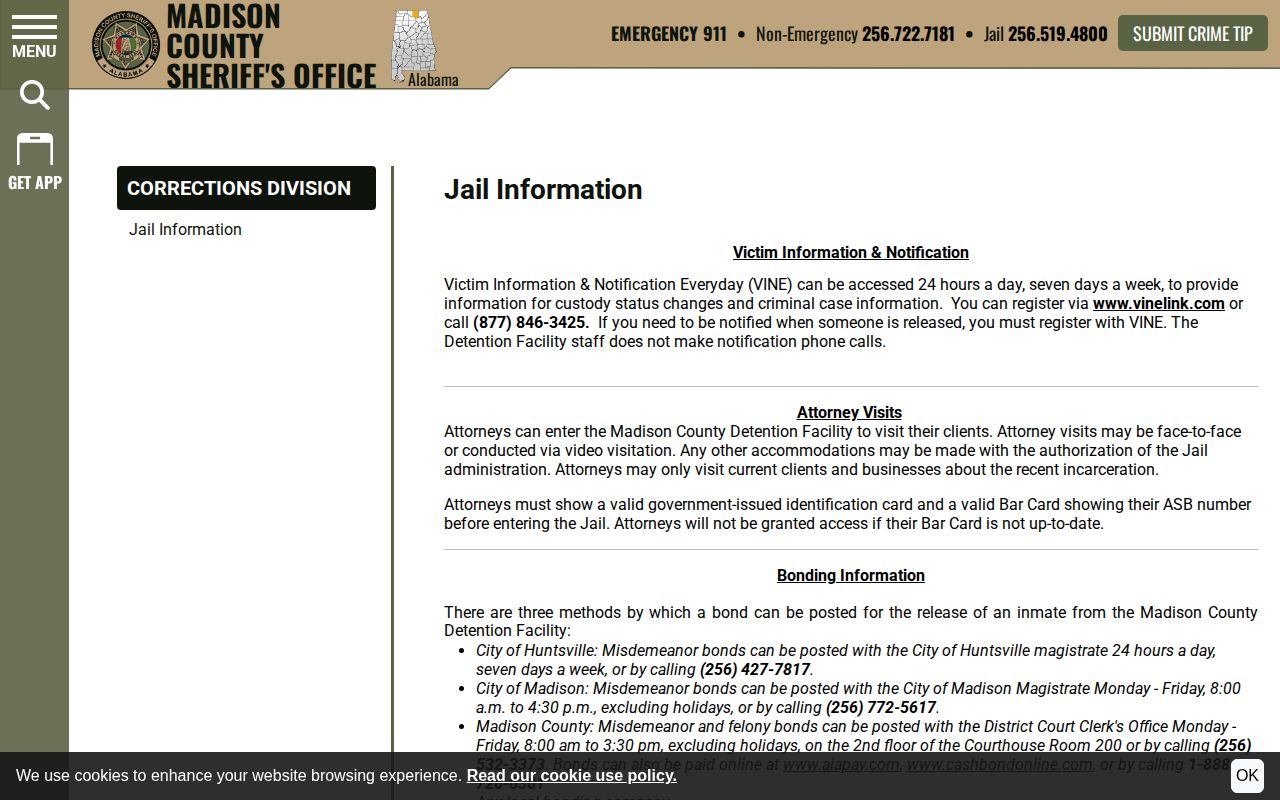
Treat those county instructions as the authority on local access. When a result looks wrong or missing, confirm it with the detention facility directly.
Check an Arrest on VINELink
Gather solid identifying details before you search. Picking the wrong person is easy with common names. An exact name paired with the MCSO booking number gives you a reliable cross-reference. You can find the booking number right below the name on the county roster. Alabama also issues an Institutional Serial number, called AIS, tied to ADOC records; that matters after a prison sentence but may not match a fresh county booking at all.
- Open VINELink and choose Alabama.
- Select the available custody-search category. If the interface offers a county or agency choice, select Madison County or the relevant Alabama jail option.
- Enter the exact name or an identifier accepted by the current interface. Try spelling variations only when they reflect the person's actual legal name.
- Compare possible matches by agency, facility, identifier, and other displayed details. Do not rely on the name alone.
- Read the record as a custody-status result. For the underlying booking fields, begin with the Madison County arrest guide.
- If no record appears, check the MCSO roster and call the jail at 256-519-4800. A missing VINE result does not prove release or that no arrest occurred.
The Alabama search view shows the state-selection path. It does not guarantee that every Madison County record will come back in the results.
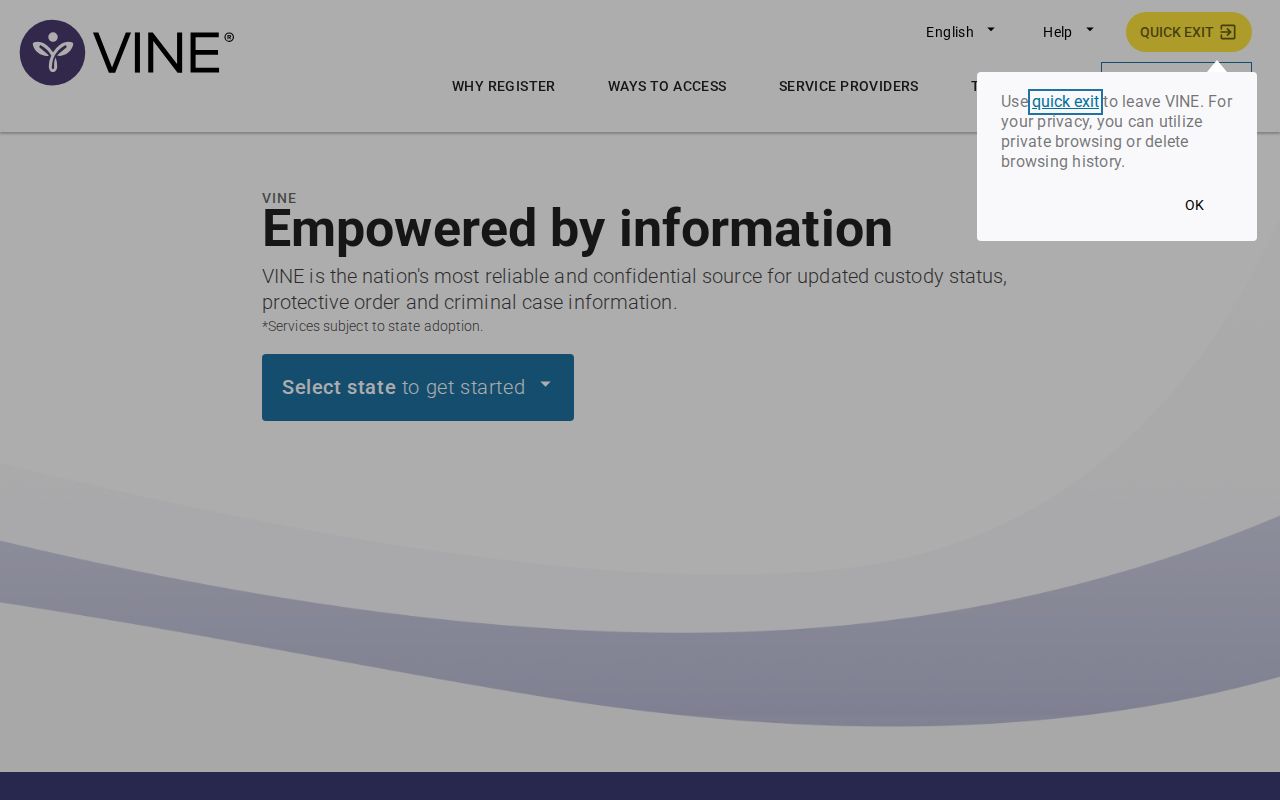
Check the listed holder and status against an official county or state source before you act on anything a result shows.
What a VINELink Result Means
Which fields appear can differ from one agency and custody system to the next. MCSO publishes no full Madison County VINE field list. Let the interface itself show you what a particular record contains.
| Possible field | How to read it |
|---|---|
| Custody status | A status supplied by the participating custody source, not a finding of guilt or the final case disposition. |
| Facility or agency | The organization associated with the record. Confirm it because county jail, state prison, federal, and immigration custody are different systems. |
| Name or identifier | A way to distinguish similar names. Compare it with the MCSO booking number or ADOC AIS number when appropriate. |
| Last update | The source's reported update point when shown. It may trail an arrest, release, or transfer. |
| Alert options | The available registration methods for that record, which may include phone, text, or email. |
For what a charge became, turn to the courts. The Madison County Circuit Clerk keeps circuit and district records, while a municipal court handles a city case.
Register for Madison Custody Alerts
Searching and registering are two different steps. MCSO is clear that release notice requires signing up. Checking a name creates no subscription. Jail staff will not call on their own, so set up the alert if you want one.
- Open the correct matching VINELink record and choose its alert or registration control.
- Select an offered delivery method, such as phone, text, or email.
- Enter a destination you control and follow the on-screen verification steps.
- Create the requested PIN or confirmation credential. Keep it private because it may be needed to manage or confirm notices.
- Review which custody events the registration covers, then save the confirmation.
- Keep MCSO's jail number available. An automated notice is useful, but urgent safety planning should not depend on a single electronic message.
The registration screen illustrates the alert step. Enter only the real subscriber's own contact details.
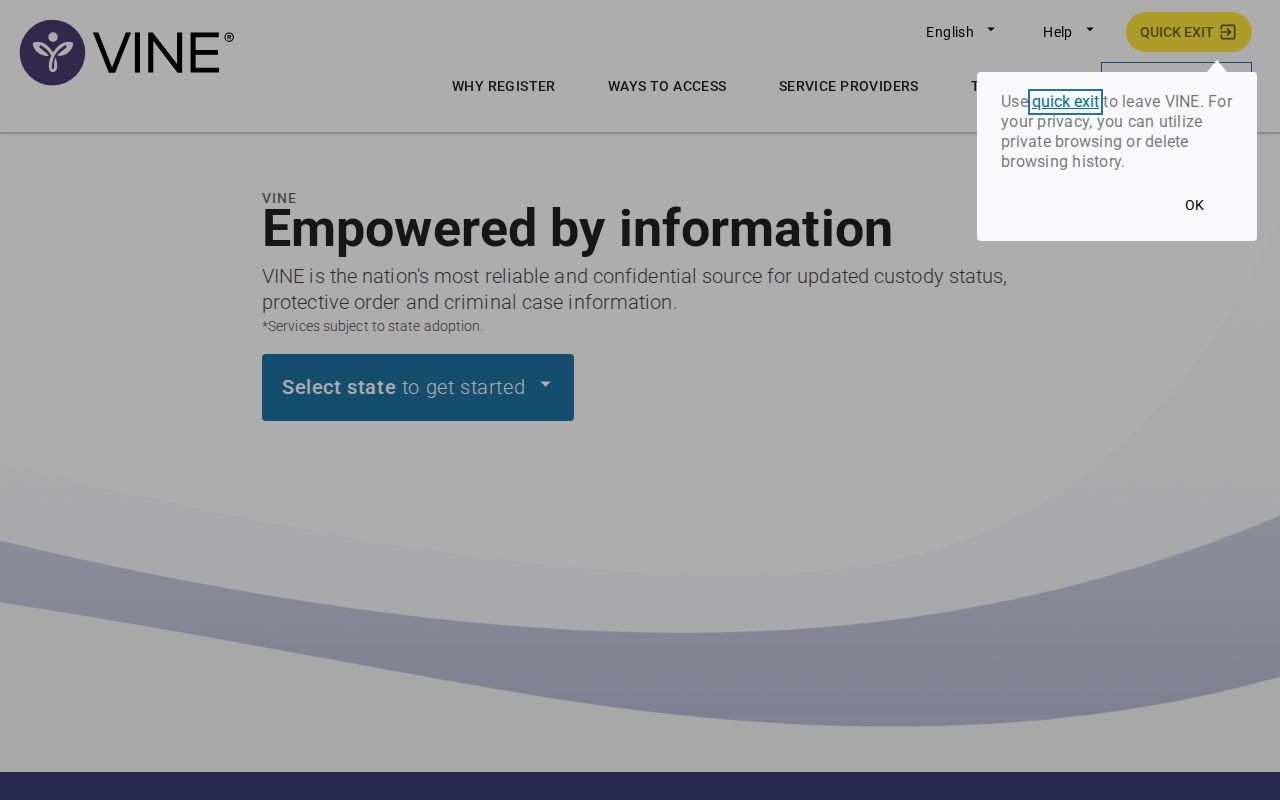
A finished registration is simply a VINE subscription you created. It is not a promise that jail employees will place a separate release call.
VINELink Limits and Confirmation
VINELink is not a universal inmate locator or a court docket. It cannot replace the Federal Bureau of Prisons locator, the federal victim notification system, or ICE's detainee locator, and it will not tell you how a criminal case ended. A release or transfer can shift which agency holds the record. Electronic feeds also lag behind real-world events at times.
Someone can drop off the current roster after a release, a transfer, or a routine correction, and that disappearance says nothing about the court outcome. The reverse holds too: an older VINE or booking entry does not mean the person is still in custody. Compare the status, facility, update details, and court record rather than trusting one screen.
County Jail Versus Alabama VNS
Madison County's VINE route and Alabama's prison notification program share a purpose but cover different stages of custody. Someone just arrested or still held at the Madison County Detention Facility belongs on the MCSO roster, with a jail number, and on the county-directed VINE path. Someone convicted in Alabama and sentenced to state prison belongs in the Alabama Victim Notification System and the ADOC inmate search.
The state site tells users whose case has not gone to trial to contact the county sheriff. That one instruction explains why a missing ADOC record settles nothing about a new Madison County arrest. ADOC locates current state prisoners; it is not a county booking archive. The county roster, in turn, is not a list of sentenced state inmates.
When Custody Records Change
An arrest in Madison County sets off a chain of separate events, and none of them happen at once. The jail booking comes first, then the roster entry, then a first appearance, and only then any alert a system sends. MCSO notes that a felony warrant can take up to 48 hours to process through the Magistrate's Office, and district-court cases follow a 72-hour hearing path. Those local timelines explain a common frustration. Two official screens can disagree simply because each one updates at a different point in the process.
Bond changes everything fast. A person released in Huntsville one morning may still show as in custody hours later, since the city, Madison, and the county each run their own magistrate and clerk channels. The detention facility itself says it does not set or announce release dates. So treat VINE as what it is. It alerts you to custody changes; the court and the holding agency confirm them.
Choose the Right Custody System
A Madison County arrest can land a person in several different custody systems, and each one answers a different question. The MCSO roster shows who is in county custody right now. VINELink lets you search a single custody record and sign up for change notices. The Alabama Department of Corrections locator tracks people already serving state sentences, while a court file holds the hearings and outcomes. None of these can stand in for another.
Federal custody works the same way. Federal Bureau of Prisons inmates appear only in the BOP locator, and federal victim notices run through a separate notification program. Immigration detention means the ICE Online Detainee Locator System or the responsible field office. Keep in mind that some people are simply released. Starting with the arresting agency, then following each documented transfer, beats hunting through every database as if they all held the same people.
The ADOC locator works best with an AIS number or a full name, plus the race, sex, birth-year, and institution filters. Enter an AIS number and it takes precedence, the state interface says. The tool serves as a location and status source. It offers no public photo field. Certain youthful-offender records are excluded from it entirely.
If a Madison Record Is Missing
A missing Madison County record usually comes down to timing or jurisdiction. Check the spelling and any identifier first. A fresh booking may still sit in intake, a released person drops off the current roster even though the booking record survives, and a transferred or sentenced person may now live in ADOC, BOP, or another holder's system. Sealed, expunged, juvenile, or protected records stay out of public view altogether.
When the answer is not online, pick up the phone. MCSO jail information sits at 256-519-4800, and a booking number speeds things along. Retained county records go through the Criminal Records Division at 705 Wheeler Avenue in Huntsville, open to the public Monday through Friday, 8:00 a.m. to 4:00 p.m. Case results come from the Circuit Clerk's records-request route for circuit and district matters, while municipal cases must be requested from the city court. Each step separates a technical hiccup from a real change in custody.